
Small Problems can sometimes feel much bigger than they appear, especially when emotional stress has been building for weeks or months. A person may understand that a situation is manageable yet still struggle to respond calmly. This disconnect between logical understanding and emotional experience can be frustrating, leaving someone wondering why everyday demands suddenly feel so difficult.
When Small Problems begin to trigger intense frustration, anxiety, sadness, or mental exhaustion, the underlying cause may extend beyond the immediate situation. Sleep difficulties, ongoing responsibilities, unresolved emotions, and persistent stress can all influence how the brain processes challenges. Emotional well-being depends on more than the circumstances a person faces; it also depends on the psychological resources available to manage them.
Understanding why Small Problems sometimes feel completely overwhelming can help individuals respond with greater self-awareness and compassion. Rather than interpreting these reactions as personal weakness, it is useful to examine the emotional, cognitive, and physical factors that may contribute to them.
What Makes Everyday Challenges Feel So Difficult?
The intensity of an emotional response does not always correspond directly to the size of a problem. People experience daily challenges through the lens of their current mental state, previous experiences, expectations, and available coping resources.
When someone feels emotionally balanced, ordinary demands may seem manageable. However, when mental resources are already stretched, even a relatively minor difficulty can feel like another responsibility added to an already full mind.
Small Problems can become especially difficult when a person has been trying to maintain control over several areas of life without allowing sufficient time for recovery. The immediate concern may be manageable in isolation, but its emotional impact can be influenced by everything that came before it.
This is an important distinction: feeling overwhelmed does not necessarily mean a person is overreacting intentionally. It may indicate that their current demands exceed their perceived capacity to cope.
The Accumulation of Everyday Stress
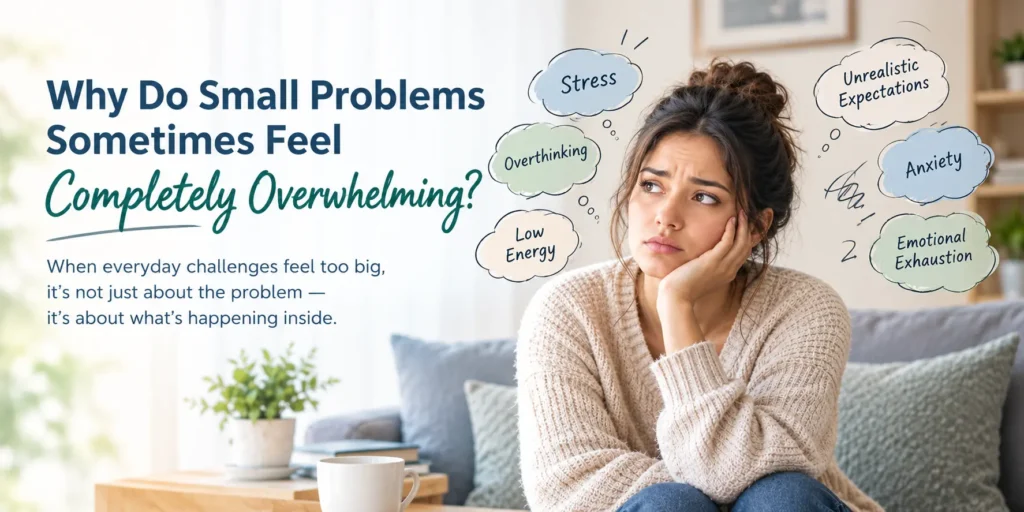
Stress does not always arrive through one major event. It can develop gradually through repeated demands, uncertainty, emotional tension, and insufficient rest. Over time, these pressures may reduce a person’s ability to manage additional responsibilities comfortably.
When stress accumulates, the mind may become more sensitive to perceived difficulties. Patience can decrease, concentration may become less reliable, and emotional reactions can intensify.
Small Problems may therefore feel unusually demanding because the person is responding to both the immediate concern and the stress that has accumulated beforehand. Recognizing this pattern can help individuals understand their reactions without automatically blaming themselves.
Emotional Capacity Is Not Constant
People often expect themselves to maintain the same level of patience, concentration, and emotional control every day. In reality, psychological capacity fluctuates.
Sleep quality, physical health, workload, interpersonal tension, and periods of uncertainty can influence how much emotional energy remains available. A person who has been coping effectively for some time may eventually find that their usual strategies no longer feel sufficient.
This does not necessarily indicate a serious mental health condition. It does, however, suggest that emotional capacity deserves attention rather than being treated as an unlimited resource.
The Psychological Reasons Small Problems Feel Overwhelming
Several psychological processes can influence how a person interprets everyday challenges. Understanding these processes can provide a clearer explanation for emotional reactions that otherwise seem confusing.
Anxiety and the Anticipation of Negative Outcomes
Anxiety can make uncertainty feel threatening. Instead of evaluating a concern only according to its present significance, the mind may focus on what could go wrong, what remains unresolved, and whether the situation might become more difficult.
This anticipatory thinking can increase emotional pressure before a person has fully assessed the situation. A manageable concern may begin to feel complicated because the mind is simultaneously processing several possible outcomes.
Small Problems can become harder to manage when anxious thoughts repeatedly return to the same concern. The person may struggle to distinguish between what is happening now and what they fear might happen later.
Learning to recognize anxious thinking can help create distance between a concern and the predictions surrounding it. Cognitive behavioral therapy (CBT), for instance, can help people identify unhelpful thought patterns, evaluate their accuracy, and develop more balanced responses.
Perfectionism and Unrealistic Expectations
Perfectionism can contribute to emotional overwhelm when people believe they must handle every responsibility correctly, efficiently, and without making mistakes.
Under these expectations, ordinary setbacks may feel like evidence of personal failure rather than manageable difficulties. The emotional burden increases because the person is not simply trying to resolve a problem; they may also be judging themselves for having encountered it.
Over time, this internal pressure can make decision-making more difficult. People may spend excessive time reviewing their choices, worrying about mistakes, or attempting to eliminate uncertainty.
A healthier approach involves recognizing that competence does not require perfection. Developing realistic expectations can reduce unnecessary pressure and make everyday responsibilities feel more manageable.
Negative Self-Talk and Emotional Amplification
The way people speak to themselves can influence how they experience stressful situations. Harsh internal criticism may intensify frustration, shame, and anxiety, making it more difficult to respond constructively.
When a person repeatedly interprets difficulty as evidence that they are incapable, the emotional meaning of a situation can become more distressing than the situation itself.
Small Problems may then activate broader concerns about self-worth, competence, or personal control. Recognizing this connection allows individuals to question whether their internal judgments are fair, accurate, and useful.
Self-compassion does not mean ignoring responsibilities or avoiding accountability. It means responding to personal difficulties with the same reasonable understanding that one might extend to another person.
How Mental and Physical Exhaustion Affect Emotional Responses
Emotional well-being is closely connected to physical health. The brain relies on adequate rest, energy, and recovery to regulate attention, evaluate information, and manage emotional responses.
When these needs remain unmet, ordinary demands may require more effort than usual.
Sleep Deprivation and Reduced Emotional Regulation
Sleep plays an important role in attention, memory, decision-making, and emotional regulation. Insufficient or disrupted sleep can make it harder to concentrate, tolerate frustration, and respond proportionately to stress.
When a person is already tired, their ability to pause and evaluate a difficult situation may be reduced. Emotional reactions can feel more immediate, while problem-solving may require greater effort.
Small Problems can consequently feel more intense during periods of poor sleep, particularly when sleep difficulties continue alongside other sources of stress.
Maintaining a consistent sleep schedule, creating a calming bedtime routine, and addressing persistent sleep disturbances may support emotional well-being. If sleep problems continue to affect daily functioning, consulting a qualified healthcare professional is advisable.
Decision Fatigue and Mental Overload
Everyday life requires repeated decisions, from prioritizing responsibilities to evaluating information and managing competing demands. Although individual decisions may be relatively simple, their cumulative effect can contribute to mental fatigue.
When attention and cognitive resources become strained, organizing priorities and considering alternative solutions may feel increasingly difficult.
This is one reason Small Problems can seem harder to resolve after a demanding day. The person may have less mental energy available to evaluate the situation calmly, even when its practical requirements have not changed.
Reducing unnecessary decisions, establishing routines, and identifying the most important priorities can help preserve attention for responsibilities that genuinely require careful thought.
The Relationship Between Chronic Stress and Physical Symptoms
Persistent stress can affect the body as well as the mind. People may experience muscle tension, headaches, fatigue, sleep disturbances, or changes in appetite. These effects can further influence mood and concentration.
When physical discomfort and emotional pressure occur together, the capacity to manage everyday demands may become more limited.
It is important not to assume that every physical symptom is caused by stress. Persistent, severe, or unexplained symptoms should be assessed by an appropriate healthcare professional.
When Small Problems May Signal a Deeper Emotional Concern
Feeling overwhelmed occasionally is a normal part of life. However, repeated or increasingly intense reactions may indicate that a person needs additional support.
The frequency, duration, and impact of these experiences matter more than any single emotional response.
Recognizing Persistent Anxiety or Low Mood
Ongoing anxiety may involve excessive worry, restlessness, difficulty concentrating, muscle tension, or persistent expectations that something will go wrong. Depression can involve sustained sadness, reduced interest in usual activities, low energy, feelings of worthlessness, or changes in sleep and appetite.
These conditions can affect how people interpret challenges and how much effort they need to manage daily responsibilities.
Small Problems may feel particularly overwhelming when anxiety or depression is already affecting concentration, motivation, or emotional regulation. However, this reaction alone does not establish a diagnosis.
A qualified mental health professional can assess symptoms in context, consider other possible explanations, and recommend appropriate care when necessary.
The Impact of Unresolved Emotional Experiences
Past experiences can influence present reactions. Difficult relationships, prolonged uncertainty, painful losses, or earlier periods of emotional distress may shape how a person responds to situations that feel threatening or demanding.
Sometimes, a current concern brings attention to emotions that have not been fully processed. The resulting response may feel unusually intense because the situation carries meaning beyond its immediate practical implications.
Understanding these connections can help people identify emotional patterns and develop healthier ways of responding. Therapy can provide a supportive setting in which to explore these experiences without judgment.
Emotional Overwhelm and Everyday Functioning
The effect of emotional distress on daily life deserves attention. When a person repeatedly struggles to complete responsibilities, maintain relationships, concentrate at work, or participate in activities they value, it may be time to seek professional guidance.
The goal is not to label every difficult day as a mental health problem. Rather, it is to recognize when distress becomes persistent enough to interfere with well-being.
Early support may help individuals understand their symptoms, strengthen coping skills, and address concerns before they become more disruptive.
Practical Ways to Manage Small Problems Without Becoming Overwhelmed
Managing emotional overwhelm involves more than trying to think positively. It requires understanding personal limits, responding to stress effectively, and developing practical strategies that support emotional regulation.
Pause Before Reacting
When emotions intensify, taking a brief pause can create space between a feeling and a response. Slow, comfortable breathing and a deliberate shift of attention can help some people feel more grounded.
The purpose is not to suppress an emotion or force immediate calm. Instead, it is to give the mind an opportunity to settle sufficiently to evaluate the situation.
A short pause can also help people identify whether their reaction is being influenced by fatigue, anxiety, accumulated stress, or unrealistic expectations.
Separate Facts From Interpretations
Stress can make thoughts feel like established facts. A person may interpret difficulty as proof that a situation is unmanageable, even when the available information does not support that conclusion.
Taking time to identify what is known, what remains uncertain, and what is being assumed can support more balanced thinking.
Small Problems may feel less intimidating when they are assessed according to their actual requirements rather than the most distressing interpretation of what they might mean.
This skill can be developed through reflective writing, mindfulness, or structured therapeutic approaches such as CBT.
Break Responsibilities Into Manageable Steps
Large mental workloads can feel difficult to organize when everything appears equally urgent. Identifying the immediate priority and postponing less important tasks can reduce unnecessary cognitive pressure.
Instead of expecting yourself to resolve every concern simultaneously, focus on the next reasonable action. Progress does not require completing everything at once.
Setting realistic limits also matters. Accepting that certain responsibilities can wait is sometimes a more effective coping strategy than attempting to maintain constant productivity.
Make Space for Rest and Recovery
Rest is a practical component of emotional regulation, not a reward that must be earned through productivity.
Consistent sleep, regular meals, physical activity appropriate to individual needs, and opportunities for relaxation can support overall well-being. Maintaining meaningful social connections may also reduce feelings of isolation during stressful periods.
These habits cannot eliminate every source of distress, but they can strengthen the resources people use to manage daily challenges.
Practice Self-Compassion
People experiencing emotional overwhelm may criticize themselves for struggling, which can add another layer of distress to an already difficult situation.
Self-compassion involves acknowledging discomfort without treating it as evidence of personal inadequacy. It encourages individuals to recognize their limitations, consider what support they need, and respond constructively.
When Small Problems trigger strong emotional reactions, curiosity is often more useful than self-judgment. Asking what has contributed to the reaction can reveal unmet needs, excessive demands, or patterns that deserve attention.
How Professional Mental Health Support Can Help
Self-help strategies can be valuable, but they are not always sufficient. When emotional overwhelm becomes frequent, persistent, or disruptive, professional mental health support can provide a more individualized approach.
A therapist can help identify patterns of thinking, emotional triggers, and behavioral responses that may be maintaining distress. Treatment may also address anxiety, depression, chronic stress, interpersonal difficulties, or other concerns identified during assessment.
Cognitive behavioral therapy may be useful for examining unhelpful beliefs and developing practical coping strategies. Other therapeutic approaches may be appropriate depending on a person’s experiences, preferences, symptoms, and treatment goals.
Professional support should be tailored to the individual rather than based on assumptions about what their symptoms mean.
New Hope Behavioral Health offers mental health services for individuals seeking support with emotional and psychological concerns. Depending on individual needs and service availability, professional care can help people better understand their experiences and develop healthier ways of managing stress.
Small Problems do not need to become a source of constant distress before someone deserves help. Seeking guidance can be a constructive step toward improving emotional regulation, strengthening coping skills, and restoring confidence in everyday life.
Building a Healthier Relationship With Everyday Challenges
Learning to manage emotional overwhelm begins with recognizing that reactions are influenced by multiple factors, including stress levels, physical health, thought patterns, and personal circumstances.
Small Problems may feel unusually difficult when emotional resources are depleted, anxiety is persistent, or expectations have become unrealistic. Understanding these influences allows individuals to respond with greater awareness instead of assuming that every intense reaction reflects a personal failing.
Change rarely happens all at once. Consistent self-care, realistic priorities, supportive relationships, and appropriate professional guidance can gradually improve the way people respond to everyday pressures.
Most importantly, emotional difficulty deserves attention before it becomes unbearable. By acknowledging personal limits and seeking support when necessary, individuals can develop a more balanced approach to daily life and build greater confidence in their ability to manage challenges.
Frequently Asked Questions
1. Why do small problems sometimes feel completely overwhelming?
Small Problems can feel overwhelming when stress, anxiety, emotional exhaustion, or lack of sleep reduces a person’s ability to cope. Previous experiences and negative thought patterns can also intensify emotional reactions, making everyday challenges feel more difficult to manage.
2. Can anxiety make small problems feel bigger than they are?
Yes. Anxiety can increase sensitivity to uncertainty and encourage excessive worrying about possible outcomes. This can make manageable situations feel threatening or complicated. Recognizing anxious thought patterns and seeking professional support when needed can help improve emotional regulation.
3. Is feeling overwhelmed by small problems a sign of depression?
It can sometimes be associated with depression, particularly when accompanied by persistent sadness, low energy, reduced interest in activities, difficulty concentrating, or changes in sleep. However, feeling overwhelmed alone does not indicate depression. A qualified mental health professional can assess symptoms and recommend appropriate support.
4. How can I stop feeling overwhelmed by everyday problems?
Start by pausing before reacting, identifying your immediate priorities, and separating facts from assumptions. Maintaining healthy sleep habits, taking regular breaks, practicing self-compassion, and talking with someone you trust may also help. If these feelings persist or interfere with daily life, consider speaking with a mental health professional.
5. When should I seek professional help for emotional overwhelm?
Consider professional support when emotional overwhelm becomes frequent, lasts for an extended period, or interferes with work, relationships, sleep, or daily responsibilities. New Hope Behavioral Health can be a resource for individuals seeking mental health support and guidance in managing emotional distress.
Care starts with understanding.
Explore more perspectives on mental health and get to know the people behind your care.
Meet our providers